
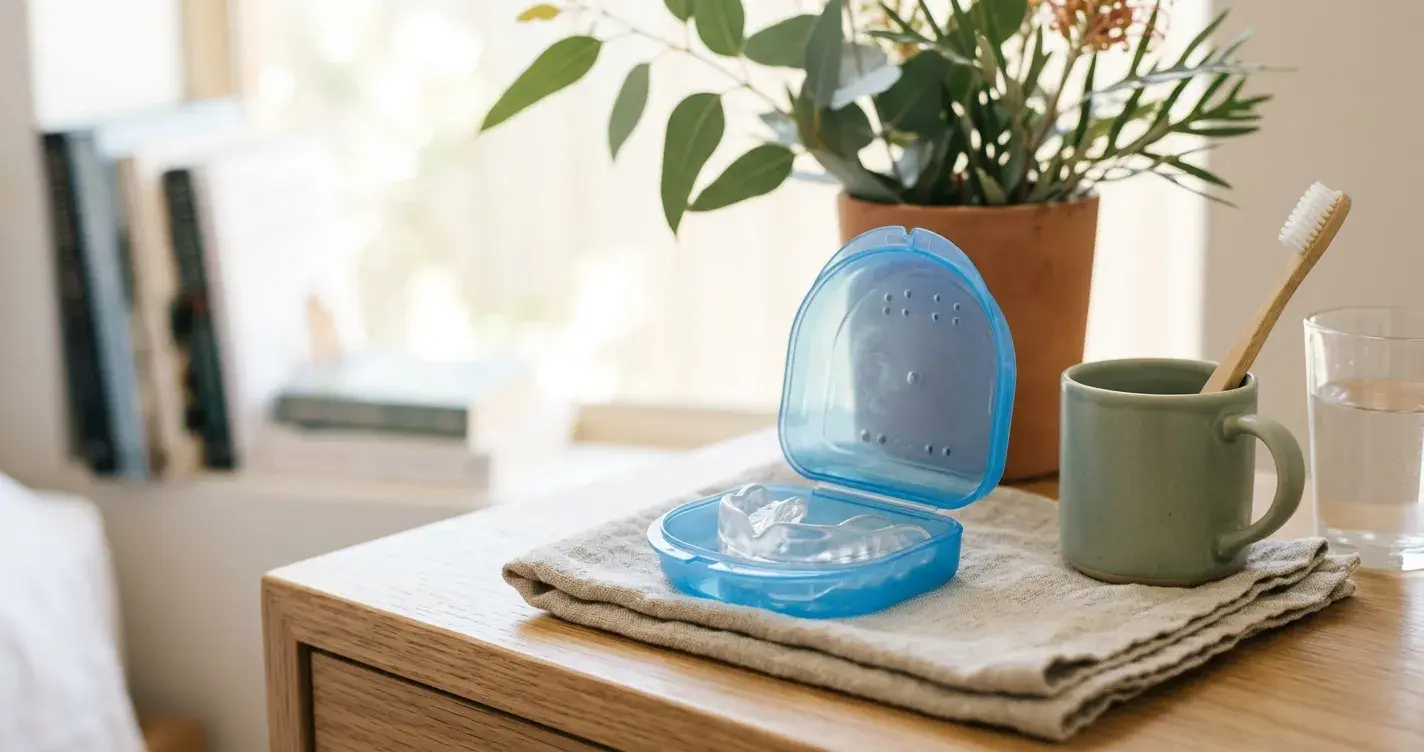
If you wear a mouthguard for sport or to stop grinding at night, you've probably wondered whether a quick rinse under the tap is really enough. It's a fair question. A mouthguard sits in your mouth for hours at a time, so keeping it clean matters just as much as keeping your teeth clean. At Hocking Dental Care, we're often asked how to clean a mouthguard properly, so we've put together a simple routine you can stick to at home.
The good news is that looking after a mouthguard doesn't take much time. A few small habits each day, plus a slightly deeper clean once a week, will keep it fresh and help it last.
Why mouthguard cleaning actually matters
Your mouth is warm and moist, which is exactly the sort of place bacteria like to grow. A mouthguard that isn't cleaned properly can start to smell, feel slimy, or pick up a cloudy film over time. None of that is pleasant to put in your mouth before a game or before bed.
Regular cleaning also helps the mouthguard last longer, which matters if it's one made for you at the dental practice rather than a cheaper store-bought option. Looking after it properly protects the investment and keeps it working the way it should.
How to clean a mouthguard at home every day
A daily rinse is the minimum, and it only takes a few seconds. Here's what we recommend:
- Rinse the mouthguard under cool running water straight after you take it out.
- Gently brush it with a soft toothbrush, using plain water or a small amount of unscented, non-abrasive soap. Avoid regular toothpaste, as it can be too abrasive and may scratch the surface over time.
- Rinse it again, then pat it dry with a clean towel or let it air dry fully before putting it back in its case.
Never use hot water on a mouthguard. Heat can warp the shape, and a warped mouthguard won't fit or protect your teeth the way it's meant to. Cool or lukewarm water only, every time.
A weekly deeper clean
On top of the daily rinse, give your mouthguard a proper clean once a week. Soak it in a denture or retainer cleaning solution, following the instructions on the pack. This helps lift away bacteria and odours that a simple rinse can miss.
After soaking, rinse the mouthguard thoroughly under cool water before it goes back in your mouth. Some people like to soak overnight, but always check the product's instructions first, as soaking times vary between brands.
Avoid mouthwash as a soak. Many mouthwashes contain alcohol or strong colouring, which can dry out or stain the material over time.
Looking after the case, not just the mouthguard
It's easy to focus on the mouthguard itself and forget about the case it lives in. A damp, closed case is actually a perfect spot for bacteria to build up.
- Let the mouthguard dry fully before putting it in the case.
- Clean the case itself with warm soapy water every week or so, then let it air dry.
- Keep the case ventilated if possible, rather than sealed up while anything inside is still damp.
- Store the case somewhere cool, away from direct sun and away from hot cars or windowsills.
A clean case protects a clean mouthguard. Skipping this step undoes a lot of the good work from your daily and weekly cleaning.
What actually warps a mouthguard
Warping is one of the most common ways mouthguards get ruined, and it's almost always down to heat. A few things to watch out for:
- Leaving it in a hot car, especially on the dashboard or in direct sun.
- Washing it in hot water or putting it through the dishwasher.
- Leaving it near a heater, in direct sunlight, or on a warm windowsill to dry.
- Biting or chewing on it out of habit, which can gradually change its shape.
Once a mouthguard warps, it won't sit against your teeth the way it should. That can mean less protection during sport, or less comfort if you're wearing it to manage grinding at night. Keeping it away from heat is one of the simplest things you can do to make it last.
Signs it's time for a new mouthguard
Even with great care, mouthguards don't last forever. It's worth checking yours every so often for these signs:
- Visible cracks, tears or holes in the material.
- A looser fit than when it was new, or it feels like it's slipping during wear.
- A smell or taste that doesn't go away even after a proper clean.
- Thinning in certain spots, especially over the biting surface.
- Any noticeable change in shape, even a small one.
If you notice any of these, it's time to have it checked and likely replaced. A mouthguard that's lost its shape or has thinned out isn't giving your teeth the same protection it once did.
Home-made or custom: what's the difference in care?
Store-bought "boil and bite" mouthguards are softened in hot water and then shaped by biting into them. They can wear out faster and are more prone to warping, since the material is often softer and less precise to begin with.
A custom mouthguard made by our team is shaped specifically for your teeth, using a mould taken in the chair. If you'd like to understand the difference in more detail, including how custom mouthguards are made and fitted, we've covered that in our guide to custom mouthguards.
Either way, the daily rinse, weekly clean and careful storage routine above applies. Good habits protect your mouthguard no matter which type you wear.
When to bring your mouthguard in for a check
If you play contact sport regularly, or you wear a mouthguard most nights for grinding, it's worth bringing it along to your regular check-up. Our team can look it over, check the fit against your teeth, and let you know if it's holding up well or if it's time to think about a replacement.
This is especially useful if you've noticed any changes in your bite, your teeth, or the shape of the mouthguard itself since it was made. You can find more about the mouthguards we offer, including options for sport and for grinding, on our mouthguards page. If you're a new patient and haven't visited us before, our new patients page has everything you need to get started.
Frequently asked questions
Can I use toothpaste to clean a mouthguard?
It's best to avoid regular toothpaste, as many contain abrasive ingredients that can scratch the surface of the mouthguard over time. Plain water or a small amount of unscented, non-abrasive soap is a gentler choice for daily cleaning.
How often should I deep clean my mouthguard?
A weekly soak in a proper denture or retainer cleaning solution is a good routine, alongside rinsing it after every single use. Always follow the instructions on the product you're using.
Why does my mouthguard smell even after cleaning?
A lingering smell often means bacteria have built up in small grooves or cracks, or that the case itself needs a clean too. If the smell doesn't go away after a proper clean, it may be a sign the mouthguard needs replacing.
Is it normal for a mouthguard to feel tighter or looser over time?
Some change is common, especially in children and teenagers whose mouths are still growing. If the fit feels noticeably different, it's worth having it checked rather than continuing to wear something that doesn't sit properly.
Does my health fund cover mouthguards?
Many extras policies include some cover for mouthguards, though this depends on your fund and your level of cover. We're a preferred provider for HBF, Medibank, HCF, nib and Bupa, which usually means a smaller gap for eligible treatment, and we can process claims through HICAPS on the spot. Other funds can still claim after your visit. For general guidance on what might be covered, our fees and rebates page is a good starting point, though it's always worth checking the details with your fund directly.
Looking after your mouthguard is a small habit that makes a real difference over time. If yours is cracked, smells no matter how often you clean it, or just doesn't fit the way it used to, our team at Hocking Dental Care is happy to take a look. Give us a call on (08) 9306 2755 or book a time online and we'll help you work out whether it needs a clean, a repair, or a replacement.